
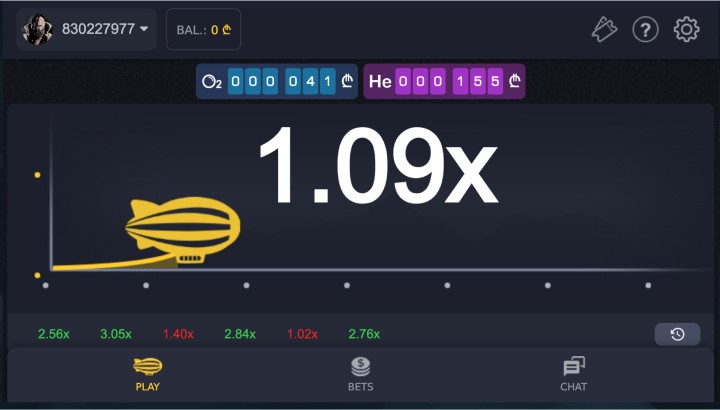
Should you wish to try crash games with your eyes open, it is essential to understand the basic maths involved. This examination of the zeppelincrashgame analyzes its two most important technical features: the RTP rate and its volatility. These factors shape how the game pays out averagely and the level of risk you take, influencing all aspects from a single frantic round to your experience over hundreds of plays.
Understanding Return to Player (RTP) for Crash Games
Return to Player (RTP) represents a percentage. It indicates how much money, on average, a game returns to players over a massive number of rounds. Consider it a long-term statistical expectation, not a promise for your next ten minutes of play. In crash games, developers bake the RTP directly into the algorithm that governs when each round crashes.

Consider an RTP of 96%. In theory, for every £100 wagered by all players, the game will pay back £96 over time. The other £4 is the house edge. This number is derived from calculating every single possible game outcome. Your own results in one sitting will almost certainly be different, swinging far above or below that average.
Examining the Zeppelin Crash Round Algorithm
All aspects in Zeppelin Crash depends on its algorithm. It employs a cryptographically secure random number generator to determine the crash point for each new round. Most versions are “provably fair,” implying you can check afterwards that the result was honest. The algorithm generates a multiplier curve where low numbers are common and extremely high multipliers are rare.
This specific distribution is how the game reaches its 96% RTP target. The chance of an instant crash occurs, but it’s calculated within this framework. A key point is that the algorithm has no memory. Every round is a fresh, independent event. A crash at 1.10x last round doesn’t make a 100x crash any more likely now.
- Round Initiation: For each round, the server establishes a secret random seed.
- Multiplier Calculation: A provably fair function applies that seed to determine the exact crash multiplier.
- Game Progression: The on-screen multiplier climbs from 1.00x until it arrives at the pre-calculated crash point.
- Player Action: Players must cash out before the crash to claim their bet multiplied by the current number.
- Verification: After the round, the game shows the seed so players can validate the outcome was fair.
Strategic Considerations for Users
Being aware of the RTP and volatility will not make you a guaranteed winner. The house edge is always there. A sensible approach starts with setting clear loss limits and profit goals before you load the game. Running after losses typically leads to reckless decisions, so managing your bankroll with discipline is your greatest defence.
Consider the game as paid entertainment, where the price is the house edge. Choose a volatility style that fits your bankroll and your willingness for risk. A small bankroll can disappear quickly if you chase high multipliers. A low-volatility approach demands patience and acceptance with small, steady gains. Concentrate on the suspense of the gameplay itself, not just the hope of profit.
- Bankroll Management: Risk only a tiny portion of your total funds per round, say 1% or 2%. This shields you from disaster during a bad run.
- Pre-set Cashout Points: Set your target multiplier before the round begins. Hold to it. Refrain from getting greedy as the numbers climb.
- Session Limits: Assign yourself a strict time limit and a loss limit for each session. Walk away when you hit either one, no matter what just happened.
The way RTP and Volatility Interact in Gameplay
RTP and volatility work on various levels, but they shape your game together. The game’s 96% RTP remains fixed, whether you play it safe or go for broke. Volatility dictates how your path toward that mathematical average will feel. A low-volatility style keeps your results clustered near the average. A high-volatility style is a thrill ride of dry spells and sudden jackpots.
This indicates two players could end up with the same overall return after ten thousand rounds, but their journeys would be nothing alike. One player might have a extended log of small wins and losses. The other might have a record of hundreds of losses wiped out by a handful of huge scores. Your cashout strategy is the regulator for your own volatility.
The Exact RTP of the Zeppelin Crash Game
The Zeppelin Crash Game offers a declared RTP of 96%. This sits right at the standard standard for many online casino games. Bear in mind, this percentage applies to the total pool of all bets placed on the game. What you personally get back hinges completely on your own choices: when you make bets and, crucially, when you press the cashout button.
That 96% figure doesn’t translate to shedding a fixed 4% of your money each session. It’s an average over the long haul. In practice, any single session could leave you up markedly or lower sharply. This audited RTP also serves as a fairness test, part of the procedure that makes the game’s crash algorithm verifiably fair and clear of manipulation.
Grasping Game Volatility and Risk Assessment
Fluctuation, or variance, defines the rhythm of payouts. A high volatility game pays out less often, but the wins can be big. A low volatility game gives you smaller wins more frequently. By its very design, Zeppelin Crash is a high-volatility game.
The risk comes from not knowing when the zeppelin will blow up. You can guarantee a tiny, safe profit by cashing out early. Or you can let the multiplier rise, chasing a big score while the chance of losing your entire bet increases with every second. Your choice of cashout point lets you dial your own personal risk level up or down.
- Low-Volatility Play: Cashing out at low multipliers like 1.10x or 1.50x. You’ll win often, but the payouts are tiny.
- Medium-Volatility Play: Aiming for multipliers between 2.00x and 5.00x. This middle ground provides a mix of decent win frequency and better payout size.
- High-Volatility Play: Chasing huge multipliers, 10.00x and above. Expect many losses, punctuated by the occasional massive win.
Common Misconceptions Regarding Crash Game Odds
A few stubborn myths can skew how players view games like Zeppelin Crash. The most damaging is the gambler’s fallacy: the belief that past results influence future ones. Each round occurs separately. A string of low multipliers does not increase the odds of a high multiplier appearing.
Another error is attributing the RTP to a short session. Some players believe a 96% RTP means they should only lose 4% of their money in an hour. The reality is, short-term results can be dramatically different from the theoretical average. And no smart betting system can remove the house edge over time.
- The “Due” Crash Fallacy: The game doesn’t remember. A 100x win isn’t “due” after 100 small crashes. The odds are the unchanged every single round.
- RTP as a Short-Term Guarantee: RTP is a long-term average measured over millions of rounds. It cannot foretell what will happen in your next 50.
- Betting Progression Systems: Approaches like the Martingale (doubling your bet after a loss) fall short in crash games. Table limits, finite bankrolls, and the random crash point break them.
- Pattern Recognition: The results are random. Any pattern you imagine you see is an illusion. You cannot employ it to reliably forecast the next crash.